

Listen Now
 You may be in a new season: settling into your first apartment, living on your own for the first time, starting over after a hard chapter, or figuring out a kitchen that is finally yours. Maybe you grew up in a home where food was eaten as soon as it was made. Maybe you shared space with family or roommates, and someone else always handled the groceries. Maybe nobody ever stopped to explain how to keep food safe.
That’s okay. Kitchen know-how is learned, and knowing it helps you care for yourself and the people you love.
One of the most important things to understand is this: your refrigerator is more than a place to keep groceries. It is one of your best tools for preventing foodborne illness.
 As a case manager, I visited a mother and her children one summer afternoon. They had recently moved into an apartment in Lincoln, Nebraska. An interpreter joined us so we could go over the family’s utility bills.
As we walked to the apartment, I noticed a strong smell. Inside, the home was very hot, and I saw flies gathering near the kitchen. I checked under the sink and found that raw meat had been left there and spoiled.
With the interpreter’s help, I explained why raw meat must be kept cold. We threw it away, cleaned the kitchen, and talked through the supplies and appliances in the apartment. At the end of the day, we both felt good about our afternoon.
I had deep respect for this mom who had lived through circumstances very different from mine. She was adapting to a new home, a new city, and a new way of doing everyday things. I got to share information that she needed to take good care of her family.
 Your refrigerator has an important job
Cold temperatures slow the growth of germs that can make you sick. Keep your refrigerator at 40°F or colder and your freezer at 0°F.
Raw meat, chicken, turkey, fish, seafood, milk, eggs, and leftovers need to be refrigerated or frozen promptly. When you come home with groceries, put the cold items away first. The chips and cereal can wait a few minutes.
Know the two-hour rule
Food should not sit out for more than two hours. On a very hot day, when it is above 90°F, the limit is one hour.
That includes raw meat waiting to be cooked, cooked food on the counter, and leftovers after a meal. Once food has been sitting out too long, it may not be safe, even if it still looks or smells okay.
Food-safety experts call the temperature range between 40°F and 140°F the “danger zone” because germs grow quickly there. Just remember: cold food belongs in the refrigerator or freezer, not on the counter or in a cabinet.
Keep raw meat in its place
Raw meat juices can spread germs onto other foods. When checking out at the store, place the packages of meat in a plastic bag if one is available. At home, keep raw meat in a bag, bowl, or container on the bottom shelf of the refrigerator so it cannot drip onto fruit, vegetables, or food that is ready to eat.
After touching raw meat, wash your hands with soap and warm water. Wash the knife, cutting board, counter, and sink before using them for anything else.
Leftovers are good. Unsafe leftovers are not.
Leftovers can stretch one meal into two and save money. Place leftovers in the refrigerator within two hours after eating. Put large amounts into smaller, shallow containers (such as cleaned out butter tubs) so they cool more quickly. When you reheat leftovers, make sure they are hot all the way through.
If you are unsure how long something has been sitting out, do not risk getting sick by eating it. Throw it out.
A safe kitchen is not about having a perfect home, expensive containers, or a big grocery budget. It is about knowing a few simple habits and using what you have.
Ask questions when you need to. Check the temperature setting on your refrigerator. Learn from a neighbor, family member, case manager, clinic, food pantry, or trusted friend. There is strength in learning what helps you take care of yourself and your family.
Kitchen 101: Remember This
 1. Put cold groceries away first.
2. Keep raw meat in the refrigerator or freezer.
3. Refrigerate leftovers within two hours.
4. Keep raw meat separate from other foods.
5. When in doubt, throw it out.
Your refrigerator may not solve every problem in life, but it can be a trusted partner in keeping your food safe and your household healthier.
Creamy Turkey Noodle Bake
By Elaine Mizuo
Makes 8 servings
Ingredients
- 2 cups leftover turkey cut into small chunks
- 6 ounces/half package of dry noodles
- 2 canned soups: Cream of Chicken, or Cream of Mushroom
- 1 cup milk
- 2 cups frozen peas/carrots/corn mix, or 1 can drained: Warm up
- Spices or cheeses (optional): Season to taste
Directions
- Preheat oven to 350°F and rub oil or butter onto all sides of a baking dish to prevent sticking.
- Boil noodles until almost done. Drain water completely.
- In a large bowl, mix the soup, milk, vegetables, turkey and optional spices together until creamy.
- Gently stir the creamy mixture into the pot of noodles.
- Pour the mixture into the prepared baking dish and bake at 350°F for 30 minutes, until bubbly.
Let it rest for a few minutes for easier cutting.
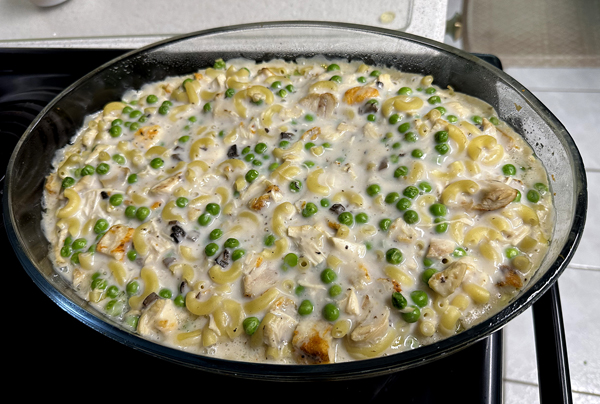
Ready for the Oven

Ready to Serve
Katie Patrick is the Executive Director of Catholic Social Services of Southern Nebraska. Previously, she founded Totonga Bomoi to combat poverty in the Democratic Republic of the Congo and worked as a CSS refugee case manager.